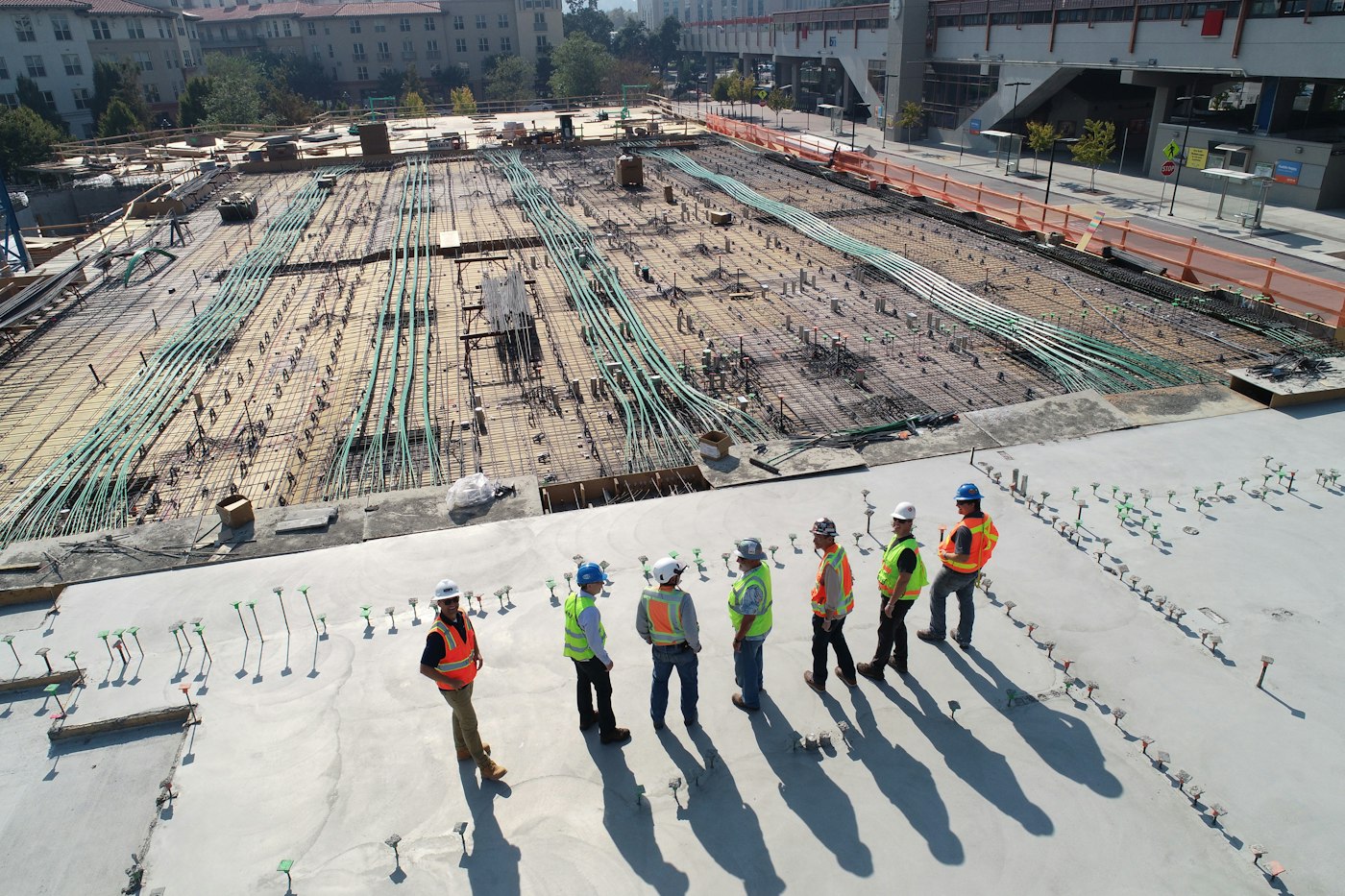
The paperwork on a construction or field service job goes on a remarkable journey. It is written on site, on a form that is slightly damp. It rides around in a bakkie for a few days. It is handed in at the end of the week, occasionally. Somebody in the office deciphers it, types some of it in, and files the rest. And the photographs that prove what actually happened are on the foreman's personal phone, along with four hundred others.
By the time the office knows what happened on site, the site has moved on, the client has a different recollection, and the chance to bill for it has usually gone.
The four expensive gaps
Contractors and service businesses do not lose money in one big place. They lose it in the same four small places, repeatedly, on every job.
- Variations nobody captured. The client asked for something extra while standing on site. The foreman agreed, sensibly, because stopping was worse. Nothing was signed, nothing was logged, and at final account it becomes a negotiation you will probably lose.
- Time that cannot be defended. Hours reconstructed on Friday from memory are neither accurate for costing nor credible in a dispute. They tend to be generous to the client and unfair to the business.
- Claims without proof. Standing time, a late materials delivery, an instruction that changed, ground conditions that were not as described. All entirely arguable and all worthless without a dated record made at the time.
- Compliance done retrospectively. Toolbox talks, permits, inductions and inspections completed properly but recorded afterwards, or recorded properly and then lost. An incident makes that a legal problem rather than an admin one.
WhatsApp is not a system, but it is a signal
Every site runs on WhatsApp, and it is worth understanding why before trying to replace it. It is instant, everyone already has it, it works on a bad connection, it handles photos naturally, and it costs nothing. Those are genuine engineering virtues, and any system that ignores them will lose.
What it cannot do is be a record. Information is trapped in a chronological stream with no structure, attached to no job, searchable only by scrolling, and living on personal devices that leave with the person. A photo of a crack in a wall means nothing in eighteen months when nobody can say which unit, which date, or which instruction it related to.
The goal is not to get people off their phones. It is to make the thing they already do with their phones land somewhere that will still make sense at final account.
What capture on site changes
The shift is that work gets recorded where it happens, against a specific job, by the person who did it, at the time they did it. In practice that means a digital job card completed on a phone or tablet, with labour and materials booked against the job, photographs attached to the record rather than the camera roll, and a signature captured on the spot.
The effects compound quickly. Variations get logged and signed while the client is standing there, which is the only moment they are easy to agree. Invoices go out days rather than weeks after the work, which does more for cash flow than any amount of chasing. Job costing becomes real, so you learn which types of work and which clients genuinely make money. Proof exists for claims and disputes. And compliance records are timestamped and located, which is precisely what an inspector or an insurer will ask for.
Bill the variation on the day
If you change nothing else, change this: no extra work starts without being logged as a variation and signed on the device before the crew leaves the area. Most contractors who do this find it pays for the entire system within a couple of jobs, because the variations were always there, they just never survived the trip back to the office.
Making it work for people in gloves
Site software fails for entirely practical reasons. The screen cannot be read in direct sun. The form has too many fields. It needs a signal that is not there. It logs people out. It was designed by someone who has never tried to use a touchscreen with dusty hands in a wind.
The requirements are therefore blunt. It must work offline and sync later, without exception. It must take a photo in two taps. It must have big targets and few fields, with sensible defaults for the things that rarely change. It must be faster than the paper form it replaces, measured honestly with a stopwatch. And it needs one person on site who is genuinely comfortable with it, because crews adopt what their foreman actually uses, not what management bought.
The end of "I think we made money on that one"
Ask most contractors how a completed job went and you get a feeling rather than a figure, sometimes a confident one, often wrong. That is not carelessness. It is what happens when the record of the work was assembled from damp paper, remembered hours and a phone full of unlabelled photos.
Capture it properly on site and the answer becomes a number, available the day the job closes, on every job, including the ones you would rather not look at. Those are the ones worth looking at.