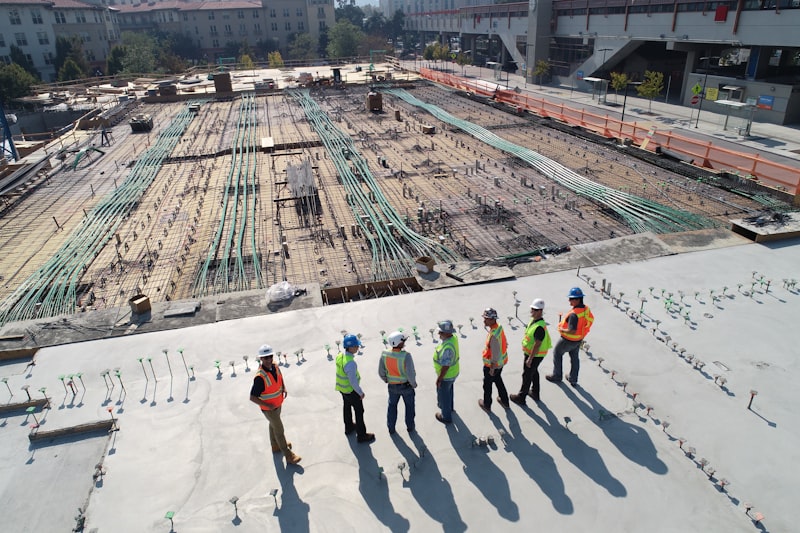
A civils contractor with a plant hire arm. Sixty-one major assets, from TLBs and excavators to tipper trucks and a drill rig, plus 196 items of registered small plant: compactors, generators, pumps, saws and breakers. Work spread across nine active sites at any time.
The asset register was a spreadsheet the financial manager updated at year-end for the auditors. It listed 214 items. The physical audit we ran in week two found 257 assets on the ground, eleven items still insured that had been scrapped years earlier, and one generator that had been on hire to a customer for fourteen months without being invoiced.
This one is unusual because the highest-value week of the project involved no software at all.
Why site assets are a different problem
Asset management in an office is easy: things sit still and belong to a person. On sites, none of that holds.
- The asset moves, constantly, and often between sites without anyone telling the office.
- Custody changes daily. A breaker belongs to whoever is holding it at 07:00 and to nobody at all by 17:00, which is exactly how things disappear.
- Servicing runs on hours, not dates. A machine that ran 300 hours last month and 40 the month before does not care about a calendar reminder.
- Downtime costs more than the asset. A R14,000 compactor failing can idle a R40,000-a-day crew, which is why "it is only a small tool" is bad reasoning.
- The finance view and the operations view are different. The fixed asset register cares about depreciation and disposal. The site cares about whether it is here, working, and serviced. Both have to come from the same record or they will diverge within a month.
An asset register that is updated once a year for auditors is not an asset register. It is a historical document that happens to describe some things you still own.
Step one: find out what actually exists
Two people, nine sites and the yard, over five days. Every asset photographed, identified, condition-noted and tagged. No software involved beyond a tablet form. This produced the first honest register the business had ever had, and it immediately paid for the whole exercise: eleven insured ghosts removed from the schedule, three machines found parked behind a container at a completed site, and the unbilled generator invoiced.
Step two: tag by class, not uniformly
Tagging everything the same way is the most common mistake. Different asset classes survive different things.
| Class | Examples | Tag | Tracked by |
|---|---|---|---|
| Yellow fleet | TLBs, excavators, rollers | Riveted steel plate plus telematics | Meter hours, fuel, service history, site allocation |
| Vehicles | Tippers, LDVs | Existing registration plus tracker | Odometer, licensing, service, driver |
| Major small plant | Generators, pumps, compactors | Rugged QR label, duplicated inside the housing | Custody scan, running hours where fitted, service interval |
| Minor small plant | Breakers, saws, grinders | QR label | Custody scan only, replaced rather than serviced |
| Consumables and hand tools | Spades, bits, blades | None | Issued as stock, not tracked as assets. Deliberately. |
That last row saved the project. The original scope wanted every hand tool tagged, which would have meant thousands of labels, a permanent argument about missing spades, and a register nobody believed. Drawing the line at a rand value and a class made the register credible.
Custody is the whole trick
The single behaviour that changes loss rates is a scan at handover: the yard scans the asset out to a site, the site foreman scans it in, and the record shows who holds it right now. It takes four seconds and it turns "it disappeared somewhere" into "it was last accepted by this site on this date". Frame it as protection for the foreman, not suspicion of them, and it sticks.
Step three: maintenance that triggers itself
Service intervals were loaded per asset class, driven by meter hours for anything with a meter and by calendar for anything without. Hours arrive two ways: telematics on the yellow fleet, and the operator's daily check, which was already happening on paper and simply moved onto a phone. When a machine crosses 90% of its interval, a job is raised, parts are checked, and the workshop schedules it against site plans rather than against a breakdown.
Defects reported on the daily check route to the workshop immediately, with a photo. Three-quarters of them are small. The value is in the quarter that are not, caught before they become a machine on a low-bed.
Twelve weeks, in order
| Weeks | Phase | What actually happened |
|---|---|---|
| 1 | Define an asset | The rand threshold, the classes, and what deliberately stays out of the register. One afternoon, and it shaped everything after it. |
| 2 | Physical audit | Nine sites and the yard in five days. 257 assets found against a register of 214. |
| 3–7 | Configure | Register structure, custody scanning, service intervals, defect workflow, cost capture per asset, links to the fixed asset register. |
| 5–8 | Tag | Steel plates on the fleet during scheduled services, QR labels on small plant as items passed through the yard. |
| 9 | Pilot | Two sites and the yard. The custody scan was redesigned twice in this fortnight, both times to make it faster. |
| 10–11 | Roll out | Remaining sites, one visit each, training the foreman on his own equipment. |
| 12 | Hand to finance | Depreciation, insurance schedule and disposals reconciled against the operational register for the first time. |
Training foremen, not users
The training was fifteen minutes per foreman, on site, with their own equipment in front of them, and it was mostly about the promise rather than the process. The concern was blame: if I sign for it and it walks, is it mine? The company's position, stated plainly and then honoured, was that the register exists to prove where things went, not to charge people for theft they did not commit. Two months in, foremen were the ones chasing the office when a transfer had not been scanned, because an unscanned transfer left the asset showing on their site.
Operators got even less: the daily check they already did, on a phone, with the meter reading added. Under two minutes. Anything longer and it gets filled in at the end of the week from memory, which is the same failure mode plant measurement sheets suffer from.
What it cost
| Line | Once-off | Notes |
|---|---|---|
| Physical audit | R77,400 | Two people, five days, nine sites, plus write-up |
| Tags and labels | R45,600 | Steel plates, rugged QR labels, applicator and spares |
| Asset management software, setup | R238,500 | Configuration, custody workflow, service intervals, mobile forms |
| Telematics on 22 machines | R131,340 | Units and installation; hours and location without a human |
| Finance integration | R63,200 | Depreciation, disposals, insurance schedule |
| Training and rollout travel | R51,700 | Every site visited, none trained remotely |
| Total once-off | R607,740 | Over twelve weeks |
| Running cost | R14,160 / month | Software, telematics subscriptions, support |
For scale: a small contractor tagging 80 items with an off-the-shelf app spends a fraction of this. The audit and the tagging scale with what you own; the software largely does not.
What changed, measured
- 43 assets were added to the register that the business owned and had forgotten, including three worth over R100,000 each.
- The insurance schedule was corrected, removing eleven scrapped items and adding nine uninsured ones. The net premium change was small; the exposure change was not.
- Small plant losses fell by 64% in the first year, entirely because of custody scanning.
- Service compliance went from 55% to 93%, and unplanned breakdowns on the yellow fleet dropped by 34%.
- Utilisation became visible, and three machines that ran under 15% were sold. Two more were kept but stopped being duplicated by external hire, which alone saved more than the software costs a year.
- Cost per asset became a real number, which made the replace-or-repair argument about an ageing TLB a five-minute conversation instead of an annual one.
What we would do differently
We would run the physical audit before selecting software, not after. It changes your understanding of scale, and in this case would have changed one configuration decision about hierarchy.
We would resist the temptation to tag everything even harder than we did. The first tagging list was cut twice and could have been cut once more.
And we would put telematics on the fleet in week one. Automatic hours made the maintenance module credible immediately, whereas the machines relying on manually captured hours took another two months to trust.
Where to start
Walk the yard and count. It costs a week and it will tell you more about your business than any proposal. Then decide what an asset is, tag by class, and make custody a scan. Only after those three does software have anything useful to manage. If you hire equipment out as well as use it, the same foundations carry straight into rental and hire tracking.